
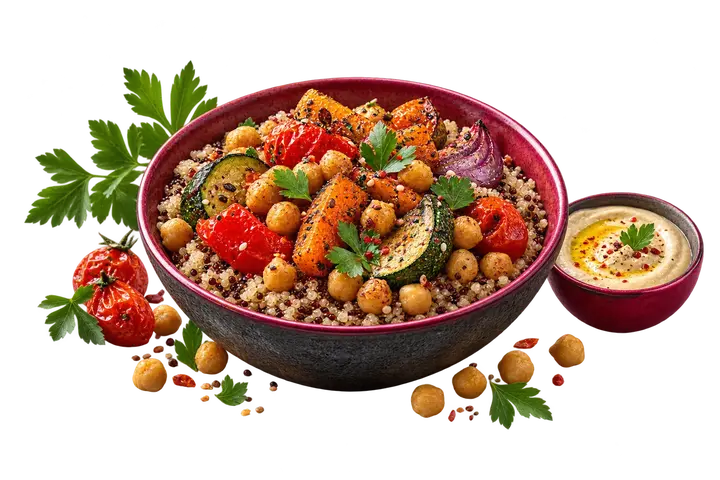
Offering a guest who avoids meat a salad or a main course with something removed does not automatically create a satisfying choice. A plant-based main needs its own idea, texture and serving logic. For the kitchen, development means more than adding another product name. Ingredients, preparation effort and portion should be considered together. The aim is to give the dish the same care as the rest of the menu, without relying on health promises or unverified figures about a supposedly guaranteed new market.
Give the plate a clear centre
A main course does not appear simply by collecting several unrelated side dishes. Choose a focal ingredient: chickpeas, lentils, beans or another product the kitchen handles confidently. FAO's work on pulses provides an official starting point for exploring this group. General ingredient characteristics do not establish the nutritional values of the completed restaurant dish or its suitability for every guest. Those claims require their own appropriate evidence.
Consider a bistro developing a grain bowl with chickpeas. The pulses can provide the centre, with grain, roasted vegetables and sauce supporting the idea. Instead of giving everything equal weight, decide which component carries the dish's identity. That also makes the name and description easier to write. Guests receive a clearer expectation than the broad label “vegetable plate” and can understand what kind of meal they are choosing.
Review flavour and texture separately
Several similarly soft components can make a dish feel monotonous. Look for a balance of crisp, juicy, creamy or firm elements that suits the recipe. An expensive imitation-meat product is not compulsory. Familiar kitchen techniques can create a distinct result. The purpose is not necessarily to reproduce a meat dish, but to present the selected ingredients with an understandable character that makes sense on its own terms and alongside the restaurant's other food.
Assess the sauce separately. A dominant dressing may hide carefully prepared vegetables, while an insufficient accompaniment can make the meal feel dry. Write a brief flavour description staff can use, for example whether acidity is pronounced or spice remains in the background. These are sensory details rather than health claims. They help customers choose and supply the explanation that even an attractive photograph cannot provide by itself.
Build portion and capacity together
Clarify the occasion the dish is intended to serve. A customer expects something different from a main course than from a sharing meze. Do not judge this by appearance alone. Tasting feedback, serving format and price position should be considered together. A manageable trial with the business's own customers gives a more useful starting point than assuming that everyone wants exactly the same new plant-based option at the same time.
Map which components can be prepared ahead and which are assembled after ordering. If the dish places extra pressure on an already busy oven or counter, review the recipe. Shared preparation can help, although putting the same sauce across the entire menu does not create meaningful variety. The dish should keep its identity while producing a workload the team can realistically manage during normal service and at familiar peak periods.
Do not turn plant-based into a blanket assurance
A plant-based dish is not automatically allergen-free. Prepared sauces, garnishes and other ingredients need checking against confirmed business information. The European Commission's food-information page offers an official reference point. How descriptions and claims apply in a particular country still needs separate consideration. A general menu article is not a legal assessment of the offer and cannot replace a properly verified answer to an individual guest's question.
Knowing the ingredient name also does not reveal the whole production process. Oil, stock or finishing additions must not contradict the description. Staff should not guess when asked about vegan, vegetarian or specific dietary requirements. Keep recipe information central and current, and recheck the relevant composition when a supplier changes. A question that remains open is better handled honestly than answered with a confident but incorrect assurance that nobody has validated.
Observe use and the dish's lasting place
Track how much of the new stock is prepared and how much actually sells. The European food-waste framework also draws attention to prepared but unused food. The objective is not to put every leftover into another recipe regardless of circumstances. It is to improve the next purchasing and production decision. Safe preparation and storage remain in place throughout the trial and are not overridden by the desire to use up excess material.
Do not decide only from the first burst of curiosity orders. Which explanation was unclear, which ingredient stayed on the plate and which preparation step challenged the team? Use those answers for the next adjustment. A plant-based main whose flavour, portion and working process have been designed together does not feel like an obligatory secondary choice. It becomes a coherent part of the restaurant's own cooking and earns its position through actual service rather than a label alone.



