
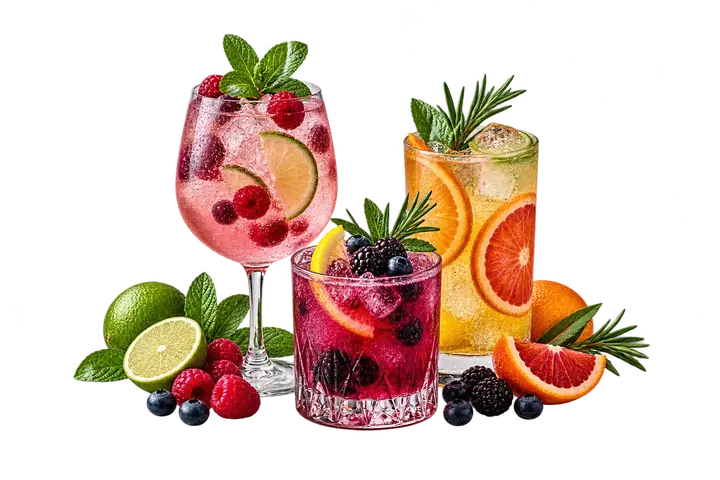
Offering only water or a ready-made soft drink to a guest who does not want alcohol can leave that choice outside the care given to the rest of the menu. The answer does not have to be a long, complicated cocktail list. A small café can develop its own drinks identity with a few clearly different flavours. What matters is that customers understand what they will receive and that staff can prepare it consistently during a busy service. Development can start with the business's own demand rather than unverified claims about a guaranteed new market.
Decide what each drink is for
Every position should not perform the same job. A refreshing companion to food, an option for somebody avoiding coffee and a drink for a longer visit serve different situations. If everything relies on similarly sweet juice bases, the names may change while the experience stays much the same. Look for useful differences in flavour, texture and serving style. More ingredients are not automatically required; a clearer intention often matters more.
Imagine a bistro comparing a fresh citrus drink with a more aromatic tea blend. One might suit a main course in its own tasting, while the other works alongside dessert. Treat that as a test of the actual recipes rather than a universal pairing rule. Record the words people use: too sweet, noticeably sharp, strongly scented or lighter than expected. Those descriptions are more useful for development than a simple statement that a drink was pleasant.
Keep the name consistent with the ingredients
An attractive name should not obscure what is in the glass. Explain the main flavours and expected character. If the recipe uses syrup, a prepared base, flavouring or a special garnish, the description should not contradict it. The European Commission's food-information framework is an official reference point for reliable product information. It does not replace the particular national requirements that may apply to the product and the claims made about it.
Avoid health-sounding shortcuts such as detox, healing or suitable for everyone. Listing a product in an alcohol-free section also does not independently establish the composition of every ingredient. Check prepared mixtures and flavourings against real supplier information. For a guest's specific needs, provide verified details rather than guesses. A marketing heading is not evidence of ingredient suitability and should not be used to dismiss a question that needs checking.
Connect the recipe to preparation
If only the employee who developed a drink can make it reliably, the item is not fully ready for service. Record ingredients, sequence and the glass to use. Ice, mixing and garnish placement can change the outcome too. Add a brief flavour check alongside the picture so that a new colleague understands the intended result instead of simply copying the visible decoration without knowing how the drink should taste.
Where advance preparation is possible, safe working methods still apply. Follow the business's verified procedures for making, holding and serving mixtures; the WHO's basic food-safety approach provides background to that discipline. Fresh fruit and herbs do not imply unlimited storage life. Do not infer a holding time or temperature from a general menu idea. Use the checks appropriate to the actual product and make clear who is responsible for them.
See the real workload behind each glass
Include more than liquid ingredients in the calculation. Garnish, ice, glassware, takeaway lids and preparation time all use resources. If a decorative element requires significant work but is rarely consumed or appreciated, reconsider its role. A photogenic drink also needs to fit the counter workflow and its selling price. Shared ingredients may help, but avoid creating extra recipes solely to justify purchasing an item that the core offer does not need.
Observe how much cut fruit and prepared mixture actually reaches customers. The European food-waste framework offers useful context for thinking about the gap between preparation and consumption. Using leftovers must not override safe handling. Smaller batches or a more realistic purchasing plan may be the right first adjustment, rather than quietly putting older ingredients into a new product or inventing more menu positions to absorb an unnecessary surplus.
Decide through a manageable tasting
Introduce the new choices in a setting the team can observe. Which description helps guests decide, which recipe holds up the queue and which drink returns half-finished? Sales volume is only part of the result; preparation effort and fulfilled expectations matter too. If the name and flavour do not match, improve the recipe and its description together rather than immediately increasing promotion or assuming there is no demand.
Finally, the menu and staff explanation should use the same clear vocabulary. Team members need to describe a drink briefly and know where to check an unfamiliar ingredient question. An alcohol-free choice then becomes a complete menu product with its own taste, presentation and operating logic, rather than a lesser replacement for another category. Whether it belongs in the business's lasting selection will become clearer through real service and attentive responses to guest feedback.



