
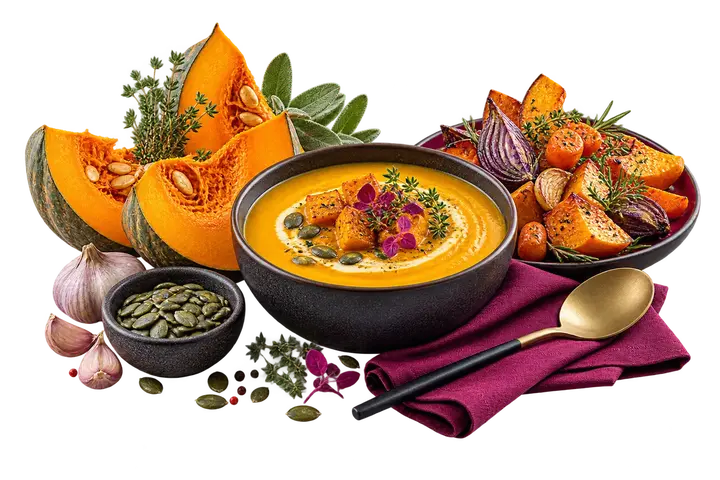
Putting pumpkin on an autumn menu is easy. Using it without making every plate feel alike requires more thought. A soup, main course and sauce may share an ingredient while offering different experiences. For a small restaurant, the objective is not simply a seasonal photograph. Usable yield, preparation capacity and an honest description need to work together. Harvests, varieties and supply conditions differ across Germany, Türkiye and other parts of Europe, so the menu should follow the conditions of the actual business.
Use the calendar as a starting point
The BZfE seasonal calendar offers purchasing orientation. A calendar does not confirm the quality or price of a particular week’s delivery. Ask about variety, maturity, delivery form and availability. If a product is described as local, its origin needs to be known. A seasonal appearance does not automatically establish that it is cheaper or environmentally preferable in every circumstance.
Do not purchase solely on the strength of a dish photograph. The usable amount after skin, seeds and preparation can differ. Delivery form also affects the kitchen’s workload. When comparing whole produce with prepared pieces, consider the work required and the usable yield alongside the label price, rather than assuming the least expensive package provides the least expensive portion.
Give each dish its own role
Consider a hypothetical bistro offering pumpkin soup, a roasted pumpkin main and a sauce. The soup might provide a soft, flowing start, while the main needs a different experience through texture, accompaniments and presentation. The sauce has another role within a complete plate. Serving the same purée in different containers does not by itself create meaningful variety.
For each item, the kitchen should explain what guests will find different. Sweetness, acidity, roasted texture and supporting ingredients belong in that decision. The description must not promise an ingredient or technique absent from the recipe. Menu copy should follow a confirmed plate rather than asking the kitchen to fulfil an attractive story invented during the design process.
Keep shared preparation within limits
Using a common ingredient can make preparation easier to organise. It does not justify making a large batch on the assumption that it will all sell throughout the week. Observe demand and which equipment different dishes need at the same time. A broader selection can overload one oven or finishing station even when the ingredients appear simpler.
The European Commission’s food-waste prevention resources provide context. The practical question is how to avoid unnecessary surplus before it occurs. Where preparation can be paused or completed must follow the kitchen’s approved processes. Shared ingredients do not automatically resolve storage and handling decisions; those need separate attention, based on what the operation can safely and consistently carry out.
Calculate more than the purchased weight
A crate price is not the same as the ingredient cost on a served plate. Trimming, preparation time, accompaniments and other ingredients all matter. Soup and a main can draw on the same purchase without having identical cost structures. Review each recipe rather than giving every seasonal item the same pricing logic.
The calculation should reflect how the dish will actually be prepared. A larger portion implied by a picture or an omitted garnish can change the result. Inconsistent plating affects both cost and the guest experience. A trial in the business’s own kitchen provides a more concrete basis than a general profit percentage borrowed from another restaurant with different purchasing and working conditions.
Preserve safe practice and accurate information
The World Health Organisation sets out basic safer-food principles. Introducing a seasonal dish is not a reason to depart from approved operating procedures. The responsible team confirms ingredient suitability, preparation and storage. This article does not replace product-specific time, temperature or reuse instructions; the kitchen should follow its valid procedures and local requirements.
Ingredient and allergen information must not be inferred from the dish name either. A soup’s colour or vegetable-based appearance does not demonstrate the absence of milk ingredients. Translations should preserve the confirmed description. If the photograph differs from the actual portion, changing the text alone may not be enough: the visual and design need review as well.
Evaluate the idea through a limited trial
Start with a manageable offer rather than replacing the whole menu. Observe sales, preparation demands, plate returns and the questions guests ask together. Attention to a photograph is distinct from an actual order; social reactions do not demonstrate an efficient kitchen. Also decide how the item will be removed when its intended offering period ends.
The final decision should ask more than whether pumpkin sold. Did the menu provide meaningful differences, could the team prepare it consistently, and was the purchase used as intended? A good seasonal menu does not show the same ingredient everywhere. It presents what the kitchen can reliably do with that ingredient as a balanced, understandable offer to guests.



