
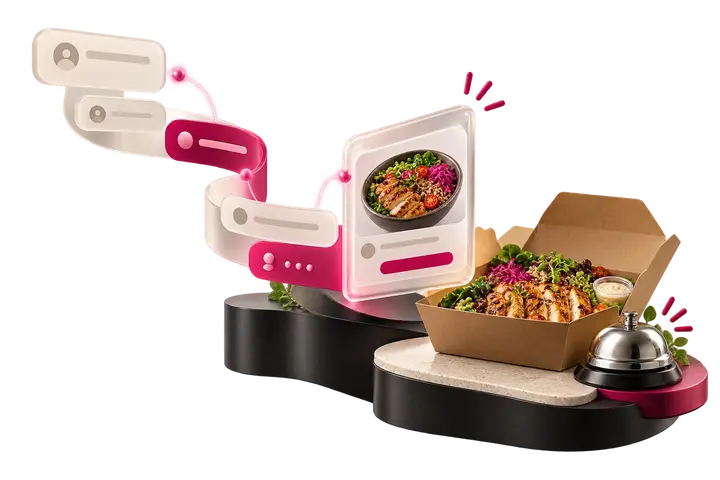
A message about dinner rarely arrives like a perfect order form. The guest names a pizza, adds a drink and mentions collecting it after work. Someone has to connect those words to the real menu, resolve choices and explain what happens next. A connected assistant can help move that conversation forward. Nina GO AI brings restaurant products and ordering work into a shared environment. The opportunity is clearer demand and a useful proposal, not the claim that every incoming message automatically becomes an accepted or paid order.
Understand the request before treating it as an order
Interest, a question and an order are different stages. A customer may be asking what is available rather than asking the kitchen to prepare it. Useful assistance begins by identifying the relevant menu product and what remains uncertain. This is more valuable than instantly giving a confident answer that happens to sound complete. The conversation can be welcoming and practical at the same time: understand the meal the person wants, then connect it to what the business can supply.
A menu-aware assistant has a better foundation than an isolated chat. It can use known products and their choices instead of inventing names, prices or combinations. Staff can then work with a more definite request. The benefit is not simply fewer typed words.
Make the missing choices visible
Imagine a neighbourhood pizzeria receiving a request for mushroom pizza and lemonade for collection after work. If the menu offers different pizza sizes, the product name alone is incomplete. The assistant can clarify the choice and the intended collection arrangement using the business's actual options. It should not quietly select an arbitrary size or turn a vague time expression into a promise the kitchen has not made.
The conversation becomes easier when the questions follow the meal rather than a rigid script detached from it. Once the size is clear, the proposal can show the selected pizza and drink together. If a needed detail cannot be resolved from available information, a colleague can take over with the request already explained.
Present a current proposal the guest can recognise
Before asking for confirmation, make the proposed basket understandable. The selected items, relevant choices, total and fulfilment method should agree with the current offer. A fluent sentence is not a reliable substitute for the real basket information. Nina GO AI's ordering approach connects products, kitchen work and customer status. A coherent proposal gives the next stage a shared reference point rather than leaving everyone to remember fragments from earlier messages.
For the pizzeria example, the guest should recognise the mushroom pizza, chosen size, lemonade and collection arrangement in the summary. A correction belongs there before proceeding. If the offer changes, do not rely on approval of an older version. This makes confirmation meaningful: the person is responding to a proposal they have seen, not to an assumption hidden inside a conversation that has gradually changed direction.
Keep confirmation, creation and fulfilment distinct
An explicit guest confirmation is a necessary step in the supported ordering action. It still should not be described as successful order creation unless that action genuinely succeeds. Likewise, an order record is not proof of payment or a kitchen's completed preparation. These states answer different questions.
Use ordinary language that matches the actual status. If the request needs staff attention, say what is really happening instead of inventing an acceptance. A human handover is not wasted effort when it carries a clear proposed meal and the unresolved point. It allows a colleague to contribute judgement without starting the conversation again.
Build a more natural journey on a trustworthy base
Future conversational ordering could make longer, more complex requests feel easier to discuss. That is an opportunity scenario, not a promise of autonomous service in every channel and language. Today's practical basis is already useful: known menu information, supported basket actions, a current summary and clear confirmation with honest status. Availability depends on the enabled modules, channel permissions and the business's configuration; payment readiness is a separate matter.
Bring a typical customer message and a real menu product to a Nina GO AI demonstration. Follow how uncertainty becomes a clear choice, then a proposal the guest can confirm. Ask what happens when staff need to help and how the resulting order status is explained. The strongest result is not a fast reply that merely sounds finished. It is a request that moves forward with shared understanding, so the kitchen and the guest are working from the same meal.



