
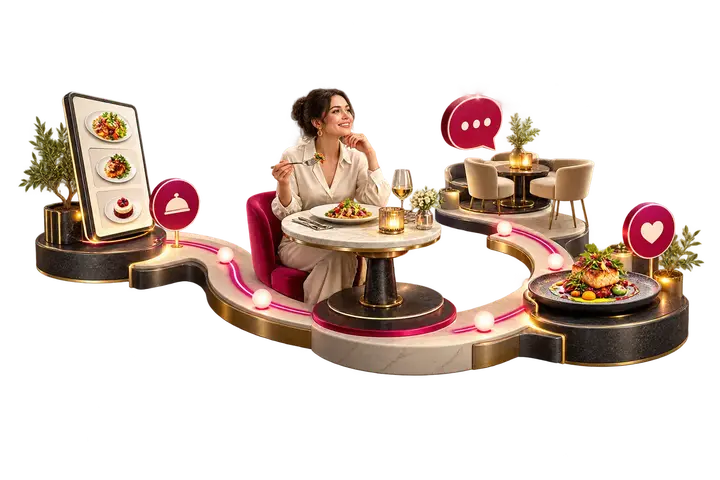
A guest should be thinking about a good meal, not about which part of the restaurant's technology to use next. Yet a simple visit can involve one menu for choosing, another explanation for options and a separate search for somebody who can help. The opportunity for the future is a journey that feels coherent. Its value is less repetition and more confidence, with digital convenience and personal attention working towards the same meal.
Start with the guest's purpose
Some people want a quick lunch; others want to explore a dish they have never tried. A strong digital experience gives both a useful beginning. Clear names, honest images and understandable options help someone decide at their own pace. The restaurant's identity remains visible without forcing every visitor through an identical conversation or asking them to study how the system works.
Think of each stage as answering the next real question. What is this dish? What comes with it? Can the choice be adjusted? Where can help be found? When information follows that sequence, the technology becomes less noticeable. That is an attractive design goal for hospitality: the tools make the restaurant easier to understand while leaving room for curiosity, a recommendation and the pleasure of being welcomed.
Follow a bistro visit
Imagine a neighbourhood bistro serving a signature grilled vegetable plate. A guest opens the menu, understands the standard portion and sees the available accompaniment. Before deciding, they want to ask whether a different accompaniment would suit the dish. A clear route to a staff member can turn that uncertainty into a useful conversation, instead of leaving the guest searching through unrelated screens.
Another visitor at the same table already knows what they want and prefers to continue quickly. Good journey design respects that difference. The restaurant does not need to make the hesitant guest rush or the confident guest wait for the same guidance. Both should recognise the same product, price and offer, and both should know when an action is a request rather than an accepted order.
Build on capabilities available today
Nina GO AI already brings menu and product work, ordering and screen content into its restaurant platform. Its live-contact modules also provide configured routes for guest communication with staff. These are useful building blocks for a more connected experience. They should be considered according to the service actually enabled in the business, rather than described as an autonomous concierge that already manages every step without people.
The practical benefit is a common product meaning across the journey. A dish should not change its identity when the guest moves from reading to choosing or asking a question. Staff can spend the conversation discussing the food, rather than reconstructing which offer the visitor saw. That is a stronger reason to connect tools than simply putting more buttons in front of a table.
Let future convenience preserve choice
A possible future scenario is a smoother transition between a chosen menu view, a question and a human reply. This is a design vision, not a claim that every module already passes all context automatically. Its appeal comes from removing needless repetition while making it clear what the guest has chosen to share.
The restaurant should not need hidden profiling to feel attentive. Explicit preferences, understandable choices and the option to ask a person can create a more respectful experience. Somebody who wants a conversation should still find one; somebody happy to browse should have that freedom. The best future journey would make those paths feel natural, rather than treating human help as a failure of automation.
Turn the vision into a relevant demonstration
Start the discussion with the bistro's actual signature dish and the questions guests ask about it. Nina GO AI's presented workflow moves from selecting products and a template to shaping the result and using screens. A demonstration built around that real offer makes the connection between design and service easier to see than a tour of unrelated functions.
Available channels, staff response, device permissions and the chosen plan still define what can be used today. Current package information helps match the proposed journey to the intended arrangement. Keep those practical limits clear without losing the purpose: a guest who understands the food and can reach appropriate help.
Bring a typical menu item and ask for a Nina GO AI demonstration from first choice to the next service step. The useful question is not whether the restaurant looks futuristic. It is whether the guest's next decision feels easier and the team has more room to provide the welcome that makes the visit worth remembering.



