
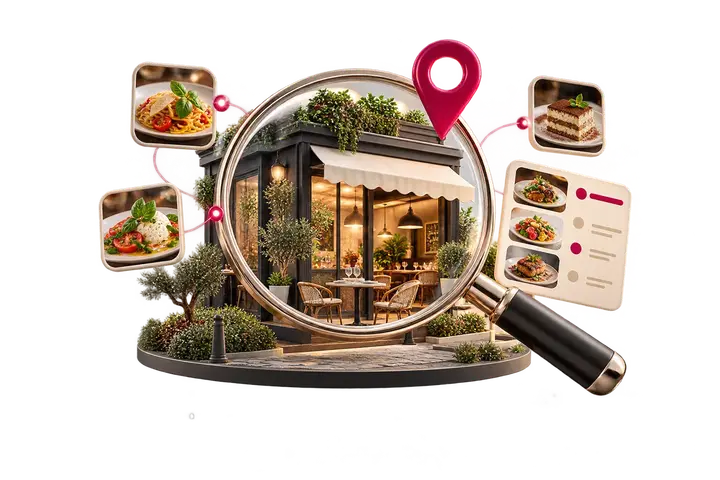
A guest searching for lunch does not want a page that sounds like every restaurant in the city. They want to understand what is served, whether collection fits their day and what makes this place worth choosing. Search is changing, but that practical need remains a strong starting point. Google emphasises useful, reliable content. For a restaurant, the opportunity is to make its real offer easier to understand through clear menu information and original explanations. AI can help with preparation, while the substance still comes from the kitchen and its service.
Answer the question behind the search
Begin with an ordinary guest decision rather than a pile of keywords. Imagine a neighbourhood bistro serving a weekday lunch for collection. A useful page explains the dish, what the offer includes and how collection works. It does not merely repeat “best lunch nearby” in slightly different forms. The guest should be able to picture the next step without needing another message to establish the basics.
The most valuable questions often appear at the counter. People ask whether a portion is a main course, whether a sauce arrives separately or whether an advertised dish is offered today. Record those recurring questions and turn the answers into clear product and service information. That creates an editorial direction particular to the business instead of copying whichever subject appears popular on another website.
Let the real product carry the story
A distinctive food description is stronger when it explains something concrete. Describe the house version, its preparation character and the intended serving experience. A regional name can stay, with a short explanation for unfamiliar guests. Original photographs or clearly illustrative visuals should support the claim rather than imply ingredients or portion sizes the restaurant does not serve.
For the bistro, an article about the lunch dish might explain why the sauce is served separately and how the collection presentation differs from eating in. Those details do not require invented statistics or a grand culinary history. They come from genuine decisions.
Use AI to shape knowledge already worth sharing
AI can help structure original material. Give it the confirmed dish description and the questions guests actually ask. A first draft can suggest a clearer sequence, compare headings or simplify a confusing sentence. The person who knows the kitchen then adds what is specific and removes statements that do not fit. The result should sound like an informed business explaining its offer, not a general machine summary of an entire industry.
This also helps multilingual work. Keep the same portion and service promise across versions while letting each language read naturally. Translating an unclear source only reproduces uncertainty. Stronger content begins with a sound source, followed by a localised explanation that a real reader can use. Producing more pages is not a substitute for having something worthwhile and distinct to say on each one.
Make the useful information easy to reach
The public menu should be readable without a customer account, and essential details should not exist only inside an image. A person following a link needs a clear title, understandable text and a route to the relevant offer. Current contact and service information helps connect discovery with a visit or order. This is a customer journey as much as an editorial task: the page must remain useful after the first attractive headline.
Look at the journey on a phone as well. Can somebody find the product, understand the scope and see what to do next? If an article promises collection but the linked page does not explain it, the journey breaks. Treat that mismatch as a practical service issue. Clear links and consistent explanations give visitors a better reason to continue than another paragraph repeating the location name.
Connect visibility with a coherent restaurant offer
Nina GO AI brings menu, ordering and content work into a connected product environment. That can support a clearer starting point for public explanations: the dish described in an article should agree with the menu guests use. The software is not a special ranking engine. Its useful role here is helping the business work from coherent product information rather than maintaining unrelated promises across every surface.
There is no separate AI optimisation requirement. Future discovery may increasingly involve conversational recommendations, but appearing in them is not guaranteed by generating articles or choosing a platform. The durable opportunity is understandable, original information that represents a real place. Bring your menu and a recurring customer question to a Nina GO AI demonstration. Explore how a clear product foundation can support the page that helps somebody move from curiosity to a confident choice.



