
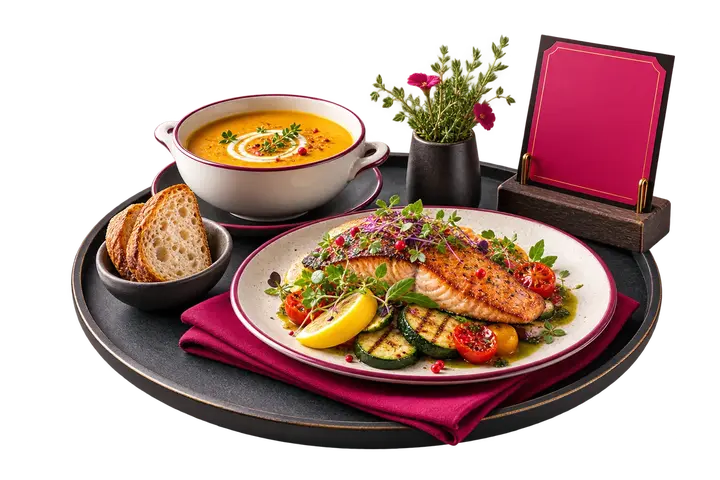
A difficult lunch service is not always caused by too many customers. Sometimes too many different preparations arrive at the same limited kitchen station at once. Each additional dish looks attractive in isolation; together, those dishes create a different workload. A shorter lunch menu can therefore be worth testing. It does not automatically mean higher sales or profit. The decision should bring together preparation demands, what guests actually need and the food left after service, rather than treating the number of dishes as the only meaningful measure.
Define the purpose before counting dishes
What are guests trying to achieve at lunchtime? Someone returning to work may need a quick, understandable choice, while a table staying longer may want something else. Before shortening the menu, define the value that must remain: prompt service, meaningful variety, a familiar signature dish or clearly explained choices for dietary preferences. Removing names without this purpose can eliminate offers that already work well.
Consider a hypothetical bistro with many meals requiring the fryer, oven and a sauce finished at the last moment. The first question is not simply which dish sells least. Ask which station stalls when orders arrive, which preparation holds other plates back and which advance work is left unused at the end of service.
Share preparation without making everything alike
Using one ingredient in several dishes can make purchasing and preparation easier to organise. It does not mean that every plate should have the same sauce and presentation. A vegetable preparation might be central to one dish and an accompaniment to another. The distinction should be clear enough for guests to understand and precise enough for the kitchen to carry out.
Shared preparation does not replace safe operating practice. Storage, processing and subsequent use must follow the kitchen’s approved procedures. Serving every surplus ingredient under a different name the next day is not a general solution. Whether food remains suitable and meets the intended quality standard must be decided independently of the ambition to run a smaller menu.
Find the bottleneck in real orders
A simple sheet can record receiving an order, starting preparation, final checking and handing it over. Where does the team wait during the busy period? Are ingredients hard to find, is equipment being shared, or must staff ask about the order again? This observation does not initially require an expensive system. It needs a simple method that people can sustain without creating another source of pressure.
ENERGY STAR provides restaurant operational resources. Their efficiency perspective can be considered alongside the preparation plan, without promising a particular time or energy saving in advance. Removing a dish does not automatically reduce all kitchen costs. Opening hours, equipment use and the service format also need comparison before a smaller list is described as a financial success.
Separate the reasons for leftovers
UNEP’s food-waste work emphasises measurement. Within the restaurant, one end-of-day total does not explain enough. Overproduction, food returned on plates and preparation trimmings point to different causes. A low-selling dish may need a different response from one whose portion regularly comes back unfinished.
The European Commission provides another reference framework for preventing food waste. During a lunch-menu trial, record both the remaining amount and its cause. Instead of removing an item entirely, a clearer portion description, a smaller preparation batch or a more precise serving period might be appropriate. Use the observations to question the decision rather than searching only for evidence that supports a preferred outcome.
Evaluate the trial with guests and staff
Run the new selection for a limited period first. Compare similar trading days through the order mix, kitchen flow and feedback. An event nearby or unusual weather may change customer traffic and should not automatically be attributed to the new menu. The importance of a removed favourite to regular guests also deserves consideration, even if its total sales volume looks modest.
A short menu is therefore an operating decision, not just a design choice. If the team works more comfortably but guests cannot find a meaningful main option, the plan is incomplete. Equally, a long list does not justify delayed or inconsistent plates. A useful lunch offer connects a clear proposition, achievable preparation and observed results. Its appropriate size comes from the particular business, rather than a universal rule about how many dishes a restaurant should serve.



