
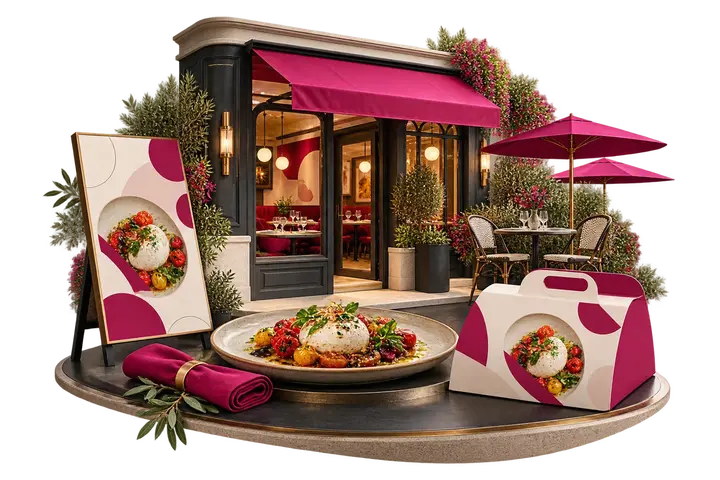
A small restaurant does not need to look like a large chain to look convincing. It needs its own offer to feel deliberate. When the dish name, image and menu presentation tell the same story, guests can understand what makes the place worth choosing. That is the opportunity of a digital window: make the restaurant's character visible before the first plate arrives.
Let the food make the promise
A strong brand begins with a recognisable reason to visit. It might be a carefully prepared lunch, a distinctive recipe or a particular style of welcome. The digital presentation should make that reason easier to see. A collection of fashionable visual effects is less memorable when it could belong to any business. Clear product meaning gives the design something specific to express.
Think of the promise as the answer to a guest's simple question: what kind of meal can be expected here? The menu's tone, photographs and emphasis should help answer it. This is not about inventing a dramatic slogan. A small, believable proposition can be stronger than language borrowed from a much larger operation, especially when the actual dish supports the impression created on screen.
Give a bistro its own presence
Imagine a small neighbourhood bistro whose signature dish is lemon-roasted chicken. Its appeal is a well-prepared familiar meal and a warm welcome. The owner chooses a calm presentation, a clear description and an image that reflects the actual serving. The dish gets room to be recognised instead of competing with unrelated graphics and a long list of claims about the business.
The same character can appear on a phone menu, a counter display and a takeaway sleeve without making every surface identical. The phone can explain the dish, while the display gives its name and the essential offer enough space. A consistent choice of tone and visual emphasis helps the guest recognise the bistro. This is a positioning decision, rather than a claim that design alone will increase sales.
Turn tools into a visual language
Nina GO AI's menu and design environment offers templates, product selection and controls for colour and layout. These provide a starting point for making the restaurant's own choices visible. A template is useful when it supports the offer, not when it becomes a substitute for deciding what the business wants to communicate. The owner can ask how the signature dish should stand out in the chosen context.
Actual product photography and AI-assisted visual work have different roles. The first can document the real serving; an illustrative image can explore an atmosphere or presentation idea. Keep the food promise honest. Nina GO AI includes image-generation tools under the configured conditions, but an attractive generated plate is not evidence of what the kitchen serves. The creative benefit is room to explore a coherent direction, with the business choosing a faithful result.
Make consistency useful rather than rigid
The guest should recognise the offer when moving between surfaces, yet each surface needs its own emphasis. A distant display cannot carry every detail of a phone menu. A small photograph needs a clearer focal point than a large presentation. Consistency therefore comes from repeated meaning and considered choices, not copying the same arrangement everywhere or filling every available space with the logo.
The Nina GO AI presentation treats a template as the beginning, followed by selected products and personal design decisions. A demonstration built around the bistro's chicken can make those choices tangible. Compare whether the result expresses the intended welcome and makes the dish understandable. That is more relevant than judging the design only by how many effects it contains.
Build an identity that can keep developing
Future interfaces may change how guests encounter a restaurant. A clear product identity remains a useful asset for those possibilities. This is a strategic view, not a prediction of guaranteed visibility. The business can develop its expression while keeping the food promise stable enough for guests and staff to recognise.
The chosen plan, available design functions and any paid image work should match the intended arrangement. Current package details help frame that conversation without assuming every capability is included everywhere.
Bring a signature dish and a few words about the character of your place to a Nina GO AI demonstration. Ask to see a digital window that looks like your restaurant, not an imitation of somebody else's scale. A strong small brand is a clear, believable promise that the next plate can fulfil.



