
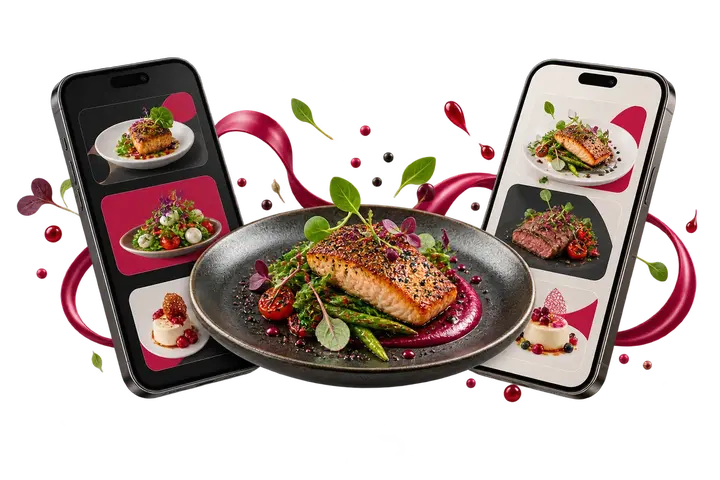
A restaurant brand working with Turkish and German speakers does not need every sentence to look the same. It needs people to understand the same product. A familiar dish name, an included side and a local portion description can carry different expectations. Nina GO AI combines menu, ordering and screen work within one platform, offering a place to organise that information. The practical challenge is maintaining meaning while allowing each market to present its own real offer.
Begin with the dish rather than its translation
Choose a product the team sells often and write a plain description approved by the kitchen. Include what it is, how it is served and what the standard portion contains. A recognisable traditional name can remain, followed by an explanation for guests who do not know it. A translation that sounds elegant but implies another cooking method is not an improvement.
In a Turkish-German bistro, a breakfast plate has a shared concept but different locally sourced cheeses. Calling both plates identical would create a false expectation. The brand can keep its style while describing the actual ingredients of each offer. Consistency means a dependable definition, not pretending that every supplier and every plate are the same in both countries.
Separate shared identity from local commercial details
Names, photographs and the overall tone may be coordinated. Local prices, portion choices and availability still require approval by the business responsible for that offer. A price written in euros should not become a lira offer through an assumed conversion. AI-powered restaurant management should not be treated as proof that tax treatment, invoicing or fiscal till requirements have been solved.
Keep market-specific information explicit in the working record. Staff should know which restaurant and offer they are discussing before changing a product. This matters particularly when similar names appear in different local menus. A central habit of checking context is more useful than asking bilingual staff to remember every exception during a busy shift.
Review translation as a service task
Where menu translation is available and configured, use it to support a controlled review. Ask a competent speaker to read the result as a guest would. Check culinary names, ingredients, size and whether a side is included. Translation quality is not demonstrated by the absence of spelling mistakes. The important question is whether the guest is being promised the correct meal.
Allergen and other important product information must come from confirmed business knowledge. A translated phrase does not certify that a dish is free from an ingredient. When staff are uncertain, they should consult the kitchen rather than make a fluent guess. A clear short explanation is better than confident wording that the operation cannot support.
Give the team a shared vocabulary
Keep a small working glossary for repeated terms: portion names, preparation methods, sides and common substitutions. Explain the term's operational meaning rather than merely listing equivalents. A new colleague should understand what to prepare or deliver, not just how to pronounce the menu. Use the same definitions in training, customer explanations and the published product information.
Nina GO AI's presented workflow includes reviewing a change before approval and checking its publication state. Apply that discipline to language edits too. Updating one description does not establish that every intended guest view already shows it. Test the affected language and screen, then tell the team exactly what changed.
A brief staff trial can check the glossary. Ask a new colleague to explain an offer in their own words, then compare that explanation with the approved dish. The exercise should reveal missing context without turning into a language examination. What matters is whether the same meal would be prepared and understood.
Plan the rollout around real needs
Begin with frequently ordered dishes and the languages actually needed by guests and staff. Check enabled functions, the chosen Nina GO AI plan and any service arrangement before building expectations around continuous updates or AI assistance. The current plan information is the reference for what is included; it is not safe to assume identical coverage across all packages.
After launch, collect the questions that still arise. If guests repeatedly misunderstand one item, revise its explanation at the source and review the corresponding versions. Do not add a separate improvised answer in every channel. The aim for restaurants in Türkiye and Germany is a common operating language: the team can explain the offer confidently, local details remain accurate, and the guest receives the meal that the menu actually described.



